
212: ‘Curiosity as a KPI’, with Ashley Hastings
A conversation with Ashley Hastings about operationalizing curiosity as a KPI in architecture, the role of AI in enhancing design technology, and fostering a culture of collaboration and continuous learning within organizations to drive innovation and improve project outcomes.
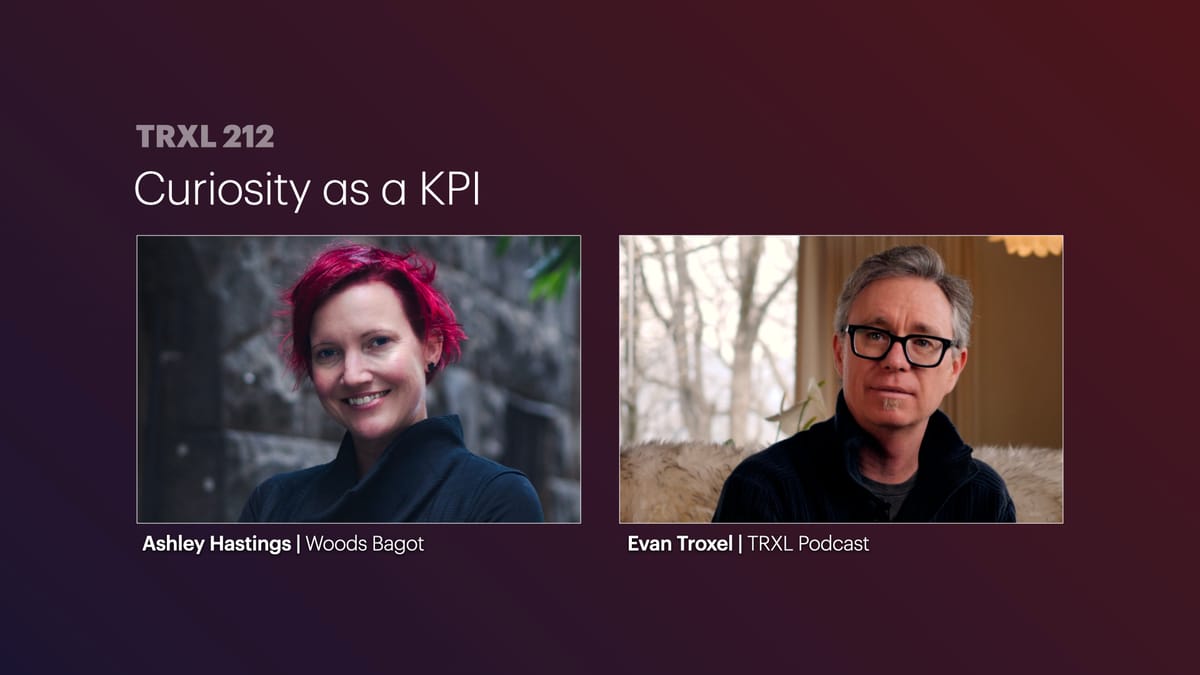
Ashley Hastings joins the podcast to talk about what it really means to make curiosity a key performance indicator (KPI).
We discuss how curiosity can and should be operationalized as a measurable part of firm culture—not so much as something tracked, but rewarded and tied to real outcomes instead of being left to chance. Ashley shares her perspective on aligning incentives for innovation, treating training like a product, and creating feedback loops that actually capture and scale knowledge across teams.
We also talk about the post-GPT reality of context over keywords, and how design technology leadership is increasingly about change management and culture design.
If you’re a digital practice leader, BIM manager, or anyone trying to build a more innovative, adaptive practice, this conversation offers a clear path toward turning curiosity into a strategic advantage.
Original episode page: https://trxl.co/212

Watch This Episode on YouTube:
Some links on this page help fund our work, and we may earn a commission from purchases at no extra cost to you.
Curiosity by Alastair Reid
Ashley Hastings: “I was recently reminded of a poem that I’d learned in high school, and that my English teacher had given me in a graduation card senior year. Call it a guide, as most poems can be. It’s stuck with me all these years.”
Connect with the Guest
- Ashley Hastings — LinkedIn
- Woods Bagot — Website
- Woods Bagot — LinkedIn
- Women in BIM — Speaker profile: Ashley Hastings
- Melbourne Build — Speaker page & AI panel
Books and Philosophies
- Shoshana Zuboff — The Age of Surveillance Capitalism
- Wikipedia Overview
- Frames the data economy architects are designing within—useful context for AI-in-practice conversations.
- Matthew Crawford — Shop Class as Soulcraft
- Amazon
- A case for hands-on craft and judgment—echoes the “keep it human” theme in digital practice.
- Nicholas Carr — The Shallows
- Amazon
- How tech reshapes cognition—relevant to learning cultures and digital literacy.
- Adam Grant — Think Again
- Amazon
- Practical tools for curiosity-as-a-KPI: unlearning, rethinking, and constructive debate.
- Peter Senge — The Fifth Discipline
- Amazon
- Systems thinking for organizations—great for aligning design tech with firm strategy.
- David Epstein — Range
- Amazon
- Why generalists and cross-pollination matter in AEC innovation.
Events and Networks
- Women in BIM (WIB) — Global network for digital practice leadership
- Association for Women in Architecture + Design (AWA+D) — AI & practice salons
- Melbourne Build Expo — Architecture & AI panels, industry tech showcase
About Ashley Hastings:
Ashley is an empathy-driven design technology leader with a background in architecture and more than a decade of experience across the global AEC industry. Her work sits at the intersection of design, systems thinking, and emerging technology, where she guides digital innovation and operational strategy within complex project environments.
With experience spanning the United States and Australia, Ashley brings a global perspective to design challenges and a deeply human approach to technology adoption. She has led initiatives ranging from BIM integration to AI-enabled workflows, always with a focus on improving collaboration and building continuity across project teams.
Connect with Evan
Episode Transcript:
212: ‘Curiosity as a KPI’, with Ashley Hastings
Evan Troxel: Welcome to the Troxel podcast. I'm Evan Troxel, and in this episode I welcome Ashley Hastings. Ashley is a studio design technology leader at Woods Bagot. Where she's helping redefine what it means to lead with curiosity inside a global architecture firm, with a background that bridges business, architecture, and data, Ashley brings a systemic lens to how ideas move from experimentation into practice.
She joined Woods Bagot at a pivotal moment. Just as GPT entered the mainstream, forcing every practice to reexamine how they capture, share, and act on knowledge.
In this episode, we explore what it means to make exploration measurable, repeatable, and valued at the organizational level rather than left to individual initiatives, what happens when curiosity is incentivized instead of squeezed between deadlines, and how firms can use it to drive learning, innovation and retention.
Along the way, Ashley unpacks how viewing Revit as a database changed how she thought about design information, why training needs to be treated like a product inside firms and how post GPT workflows reward context over keywords. We also reflect on what it takes to turn design technology from a collection of tools into a sustained capability, one that's measured not just by software adoption, but by how much smarter the organization becomes because of it.
Something that really stands out to me in this conversation is the notion of curiosity as a KPI, as the title suggests, in an industry built on solving complex problems, curiosity isn't a luxury. It is actually the engine that keeps practice evolving. We talk about how to operationalize it through mentorship programs, learning budgets and leadership KPIs that reward inquiry instead of punishing uncertainty.
As usual, there's more information worth your time in the show notes, so be sure to check that out. You can find them directly in your podcast app if you are a supporting member of TRXL+, and if you're a free member, you can find them over at the website, which is trxl.co.
So now without further ado, I bring you my wonderful conversation with Ashley Hastings.
Ashley, welcome to the podcast. Great to have you. Great to see you again.
Ashley Hastings: Thanks so much, Evan. Yeah, it's great to see you too. Um, feels like, feels like,
we were just at Confluence.
Evan Troxel: It, it doesn't feel like that to me. It feels like it's been a decade.
Ashley Hastings: okay. Great.
Maybe you do more things than I do.
Evan Troxel: Oh, no, no. I'm just getting older. Thanks. Yeah.
Ashley Hastings: Time. Time feels shorter
Evan Troxel: Yes, time. The older you get, the time, the shorter it goes. I have a theory about that. But anyway, um, a lot's changed I think in the last two and a half, three years since, especially for you professionally, uh, geographically, uh, you know, things like that. And then, uh, also technology wise.
And so maybe you can kind, well, first of all, I would love to hear your story about your. Trajectory through the architectural profession.
Ashley Hastings: Yeah.
Evan Troxel: Um, because I think that would kind of set the stage and, and give other people some, you know, obviously some context around what you've done. And now then we can move into what you're doing.
But, but let, let's just start with, the Ashley Hastings story.
Ashley Hastings: Yeah, it's all a blur. Um, first off, thank you. Um, thanks for having me. Thanks for the invite. Um, excited to, to see you again. Um, it has been, yeah, it's been about a little over two years. Um, um, my trajectory, uh, not ever been linear. Um, and I, I got to architecture, um, by way of all natural things.
Like I studied international business for undergrad. was in the Air Force for a few years, and then that career, um, was, uh, at the time very dramatically for me cut short, um, because of a medical disqualification at the time. And so, I had planned to be a pilot in the Air Force. That was
the, that was, that was the original trajectory.
Evan Troxel: Okay.
Ashley Hastings: and, and when that all changed, I had a moment of going, well, what was that about? Why, why was, why did I go through all of that and why did I learn so much and get so far? And then it went away. And, uh, aviation, a love of aviation was, has always been a thing for me. Um, and, uh, I made a lot of, um, connections in, in my head when I was doing that soul searching after the fact.
And, uh, I used to travel a lot with my family growing. And I was fortunate enough to see a lot of the world very early, I remember going and just seeing cities, just new cities, and experiencing, uh, what it meant to be in other places and what it meant to wander around other places. And, um, this is gonna sound like a, a kind of a crazy parallel, but, uh, my love of and aircraft got me to architecture it started with a love of cities, and then you kind of zoom in and you focus on the buildings. Um, but for me it was always the, the kind of the city system or the infrastructure that, um, a place really special, um, for better or for worse, right? Um, and so when I was going through this time in my life where I was wondering what, where I was supposed to go next, I had a. A moment of saying, ah, I got it. I'm gonna be an architect. And is not, that is not the typical, I played with Legos and I
love drawing. When I was little, I did love those things. Um,
Evan Troxel: Mm-hmm.
Ashley Hastings: no, no question. I still, there's a lot of Lego in this room actually. Um, but that was not the typical kind of pathway to architecture. And, and so I, I said, okay,
um, this is what I'm gonna do.
I'm gonna find a graduate
Evan Troxel: I want, I want to ask you though, that you said you got it. So did this come where, where'd this come from? Did it come from the inner voice? Was it, did it come from somewhere else?
Ashley Hastings: Um, uh,
so road trips in California
Evan Troxel: Okay.
Ashley Hastings: always the best thing I was, um, and 'cause because you sit in traffic
oh, so long, um, it was, it was one of those moments I was actually driving back with some friends. Um. From Malibu back to Los Angeles at the time, this was 2012 and um, yeah, it was one of those I was driving. It
was evening. You have a lot of time to think and
Evan Troxel: You're just on like autopilot, right? I mean, yeah. Yeah. Right.
Ashley Hastings: Um, and yeah, it was just one of those kind of lightning bolt, um, moments, which I think
are they're rare. Um,
Evan Troxel: Yeah.
Ashley Hastings: rightfully so. I don't think people should be having those all the time. But, yeah, it was a, it was a really clear moment for me where I was like, okay, architecture onward,
what do I need to do?
Evan Troxel: The, this, this thing though is so interesting, right? Like this, I I, I'm sorry for kind of belaboring this, but, but it's like the subconscious has been working on this for a while and then it revealed it to you. Right? And, and I've definitely recognized like the power of that and like, I even have a reliance on it.
It's like you,
I think as architects especially, and, you know, maybe you didn't even have any training at this point, but I, I, we'll, we'll continue the story in a minute, but it's like, as an architect, I was trained to take in a bunch of inputs and just let it simmer, right? Like, you don't have to actively be, and I'm gonna use my air quotes, like designing, right?
Because designing happens when.
It doesn't usually happen on command. Like the ideas don't just flow out. Like you could actually, you can easily, well, not easily. You can get to that point where, because you have built the muscles to do that thing, then you sit down to do that thing and it actually happens.
But for most people, that's not how it works. That's not how creativity really works. But even in this thing, you got this message and it was like, well, like it didn't, it didn't have no context. Right? It's like something had been brewing for a while and then you were just kind of available because you were in this com contemplative state, you know, the dulce tones of the, the 1 0 1 or whatever you were on coming back from Malibu sitting in traffic and, and I, yes.
I'm from California. I say the 1 0 1.
Ashley Hastings: they're,
Evan Troxel: Yes,
Ashley Hastings: it's, it's a,
Evan Troxel: they all have.
Ashley Hastings: we all have with them.
Evan Troxel: Yes. Right.
Um, but, but you were available and, and in that state that, that kind of thing just delivers on. And I think I, I just wanted to. Puts an emphasis on it because I think that's important is like to listen for those things, but also to have a little bit of a
acknowledgement that, that we can have a reliance on them too.
And they're not just magic, right?
Ashley Hastings: Well, and it's, and it's okay to sit with your thoughts as well, because everything that you just said, Evan, is really, um, such an interesting parallel What, where we are right now, which I, I, I won't get there yet, but
just where we are right now with ai Right. And,
Evan Troxel: Mm-hmm.
Ashley Hastings: and a lot of the kind of availability of instant
gratification and of that, but, we'll,
Evan Troxel: Distraction. Yeah. All those things. Right.
Ashley Hastings: get there. Um, also, I'm, I'm kind of, I'm, I'm surprised I just said all of that, uh, in terms kind of origin story. Um, so thank you for kind of, um, opening that bit. But from, from there, um, that, that moment of going Aha architect,
and by the way, I don't practice. Um, so
Evan Troxel: was gonna say, did you know what that even meant? Like I,
Ashley Hastings: No, I
Evan Troxel: okay.
Ashley Hastings: Um, but I did, I did have that sort of, um. Innate love of building and structure.
You know, you try to build a tree house when you're a child and, um, you know, not, not very high off the ground, but, um, yeah, just Lego and connects and like all of the things erector sets, like everything was there. Um, but nothing ever really pointed directly at Um, and I, and I'm glad of that actually. Um, 'cause this wandering path has been really interesting. but yeah, so at the time I was like, okay, what can I do? I started, I enrolled in some classes at UCLA, um, for, uh, their interior architecture
Evan Troxel: Okay.
Ashley Hastings: Um, I was still very new in LA by the way. I'd just kind of gotten there early 2012 at the time.
And, um, yeah, I did, I did some courses at UCLA, which, uh, living on the east side, was. A journey every few days. Um, I started some classes at Art Center at night as well, which was really fun. and I, I started working with, I got a job as like a, a personal assistant for a general contractor in la and we were um, like, uh, nightclubs and bars in West Hollywood and Beverly Hills. And it, I didn't, I didn't know anything and it was, um, fun and crazy and, overwhelming and you just kind of go and, and do all the things and, you know, And that was, that was pretty wild. And so, uh, I, I, I was in that space for a few years and, uh, changed contractors. So I got the construction side, um, kind of first I wanna say, um, while I was doing the, the, the classes and, and kind of, I was learning, I did some hand drafting classes, so I ticked that box. I did some AutoCAD glasses, which, uh, I still never understood the structure for AutoCAD. Like how do you, how do you name the layers? I don't understand. I'm sure there's a logic to it, but, um, yeah, I kind of went through maybe very fast track, um, path to, uh, eventually. develop a portfolio. And, uh, I remember going to, was it bl in Pasadena? And, just saying, I need to make a portfolio. What does, what does that include? And
Evan Troxel: Right.
Ashley Hastings: before I'd done anything. I was just like, what do I need? Exactly?
Evan Troxel: Right.
Ashley Hastings: And, uh, so yeah, it was quite a kind of of, um, intense curiosity, uh, like, like actions and, and kind of ex exploration for a few years. And, um, and then ultimately I was looking at graduate schools. Um, I also got really involved with, um, the Association for Women in Architecture and Design. So a WA
Evan Troxel: Hmm.
Ashley Hastings: shout out. Um, got involved in, in their mentorship program, um, and had a, a, an incredible mentor who's now an incredible friend and has been for a long time. Um. Stephanie Reich, we'll just do a little shout out there. Um, and, uh, she, she really helped guide me to, she's like, you know, live, live where you wanna go to grad school, go to grad school, where you wanna work. And, and so, um, the options for me at the time were, yeah. Um, UCLA 'cause I was then familiar with it.
And then S Arc and a couple of things went into that decision. Um, first of which was sort of geography. I've always, I was always an east sider in la. and, and s Arc really presented itself as, a challenge. And I, I wanted to go somewhere where I was gonna be uncomfortable 'cause I'm a, I'm, I'm, I'm not a formalist, um, which is a, a term I,
I learned after I got there.
And, um,
Evan Troxel: Yeah,
Ashley Hastings: uh.
Evan Troxel: sure you learned it the hard way.
Ashley Hastings: Uhhuh. Um, but there were, there was just so many, there were so many incredible moments of getting to that point. And, and I did the, I did the summer program at, at cy Arc, making a meeting, which is now this incredible, like, offering of cool weirdness and really in depth like, uh, it wasn't just materials now or like, it was materials for us, and it was kind of, um, before a lot of digital interaction. and
Evan Troxel: Mm
Ashley Hastings: it's, it's just changed so much. Like, you know, our, our class, we were the one, the first ones with
3D printers, but we also missed realtime rendering.
But,
Evan Troxel: mm.
Ashley Hastings: so, um,
Evan Troxel: Yep.
Ashley Hastings: that was, um, a long-winded answer to your question of initial kind of starting off point. But, um, SA. Was a moment in time. Uh, I learned so much.
I was uncomfortable. Um, and what I really learned is that I was, I was still really interested in systems and, um, and systems thinking. And, when I was looking at like, internships and, and things that I could go and do, I, I realized I didn't really want to do the, didn't wanna do the traditional kind of architectural design as my, as my focus. I took a class in Revit one, one class, and I fell in love with it. Um, because I, I realized that
Revit is a database first, and it,
Evan Troxel: Mm-hmm.
Ashley Hastings: it, and it is a 3D modeling program second, and
it need, it has rules, right? So if we go
Evan Troxel: Mm.
Ashley Hastings: to the, start of all this rules and discipline and. Structure and, and, um, the things that I really towards, um, were, were, were down that path in,
Evan Troxel: Yeah.
Ashley Hastings: in, BIM world. And so, um, so I, I, I moved, I moved in that direction, and so was kind of tracking towards bim management, design technology. I didn't realize it at the time, but that was, that was kind of where I
was sort of naturally heading.
Evan Troxel: Yeah. So when you, when you graduated and you started looking for work, or maybe you had been interning, like were you naturally pulling toward big firm, medium firm, small firm? Where, where did you kind of fall in that spectrum?
Ashley Hastings: So, of all things, um, I, I, I don't think I, I, I wasn't thinking about like the size or the name or. Kind of those, those other drivers. Right. I was, um, I really wanted to connect with where I want, where I wanted to work. Um, and, and I, and I was an older graduate student, so I, I, I, I think a little bit of extra experience was like, Hmm, you know, find a place where you're gonna be happy. And I, I don't know that you always
think about that when you're of starting out in
Evan Troxel: Mm-hmm.
Ashley Hastings: new career. But I, I really wanted to be in a place that kind of resonated from like a, an ethos kind of standpoint. And, uh, I wound up at Arup all things, so engineering side. I interned at Arup because I had a project management background from doing the contractor side of things.
I had kind of evolved into a project management. Space. And I had the business degree, um, from undergrad, and I got my foot in the door with Arup in la and um, uh, Russell Fortmeyer, I don't know if you've come across him before, is the sustainability leader, um, at, uh, at Arup in the Americas right now. And, um, he was also one of my instructors at XY Arc. And so I I, he always talked about aup and there were, you know, so many interesting stories. And he was coming at it from a, obviously the sustainability lens and kind of material focus and things that were also, you know, I was interested in. But I was like, I don't know, you know, part of the system kind of thing. um, and so I asked him one day, I said, Hey, you know, does, does Arup do interns or anything like that? And he goes, yeah, yeah, yeah. Um, he. He's like, my team is full, but you know, gimme your CV and we'll pass it along. And I actually, I, I got into Arup as an intern in project controls, so the financial side of projects and nothing to do with anything.
But when I graduated, I, they're like, you probably wanna use your degree. And I said, yeah,
that would be great.
Evan Troxel: Nice. They were looking out for you.
Ashley Hastings: Yeah. And, and so I, yeah, so I, I, I moved, I moved to Arup, um, and joined the BIM management team. Um, but I guess in going back to the, what was I looking for? It was, um, like total,
total design was the, the concept for, um, for the basis for all the work at Arup.
And, and I really liked that approach because it was considering, considering everything, right? And it's
Evan Troxel: Hmm.
Ashley Hastings: practice and, and. Including architecture outside of the US in, in most cases, and, all of the different disciplines that exist under one roof. It's just, it's pretty rad. Um, and to have that kind of exposure as the
first part of my, let's say, new, new career, um, was really powerful and I got to learn so much.
And I just remember the, the initial, the initial definition, uh, on, on arrival was, ah, engineers
think differently than architects.
Evan Troxel: Mm-hmm.
Ashley Hastings: and I thought that was a really, and, and what showed me that was, um, just the difference in, in two dimensional approach versus three dimensional approach, but how they both kind of do, do some of, I'm, I'm putting my hands together in a kind of infinity symbol.
Like there's a lot of movement in both directions, um,
Evan Troxel: Sure.
Ashley Hastings: and, So I think that was, that was some really incredible exposure for me and learning about how everyone needed to work together a, in a BIM environment. And I think BIM ultimately, building information, modeling sounds, sounds kind of boring as a, as an, as an acronym, but we all know it.
Today is something really incredible where, um, it requires that you collaborate, like BIM wants you to collaborate, Revit wants you to collaborate, and, and, uh, it also wants you to realize that design has consequence.
Evan Troxel: Mm-hmm.
Ashley Hastings: make changes and, um, things that you decide to do affect other people. I, I get very philosophical about BIM in general, but I, I think it's a really unique, um, way of working and, and, and methodology that is much more than. A model and it's more of a, a way of interacting
with, with teammates.
Evan Troxel: Yeah,
that, that design ethos, the total design, didn't that come out of one of Ove a's like early writings? From what I recall, it's like an an essay or something.
Ashley Hastings: Yeah. Um, God, I have one of the books around here. Um, yeah. His, his approach was, was so unique, I think, and maybe at the time, I don't know, they're, they're also like, um, they're also like new iterations of, of that thinking that just try to, you know, perpetuate that idea of collaboration and coordination and, I think the idea of, of total design is really. Interesting because it can be defined in so many different
ways, depending on the person or the team or the,
Evan Troxel: Yeah,
Ashley Hastings: sector or what have
Evan Troxel: Yeah, I mean that, that to me, I mean, that's just kind of where my brain goes is like design the team.
Ashley Hastings: Yeah,
Evan Troxel: the, the business design, the approach design,
Ashley Hastings: yes.
Evan Troxel: because like the reactiveness of a lot of the way that architecture firms work, which is like new project throw, throw a ragtag team at it and go make it the best you can in the least amount of time possible.
And it's, uh, that's a very reactive approach. And I know that there's lots of firms who do really pay attention to the design of those things as well. But, but like to get back to the ethos of the company and kind of knowing who they are and what their approach is, is interesting that you kind of saw an attraction to that so early in your career.
Ashley Hastings: Yeah. And I guess going back to that, that that lightning bolt moment or those, those kind of reflective contemplative, times that, uh, we so rarely get or take for ourselves. yeah, I think, it's important to remember that everything has to be immediate and, and that's, that's, that's just gone really grand in terms of, um, uh, uh, of an idea or a thought.
But, not everything has to be immediate. And, and it's important to
be considerate and,
Evan Troxel: Mm-hmm.
Ashley Hastings: thoughtful and, and decisions that we make for ourselves, but also for other people.
And it doesn't always get to happen that way. It's kind of a luxury when you
Evan Troxel: Yeah. Oh, I, it is a total luxury because most of the time all there is is pressure to do something as fast as possible, right.
Ashley Hastings: you know, like, why,
why do we do that?
Evan Troxel: A lot of times that's a perceived pressure. It's not an actual pressure, right? It's like, oh, of course they want this as fast as possible because faster equals cheaper, equals better. And
Ashley Hastings: Oh
Evan Troxel: yeah, but rarely does it actually rare. Rarely is it, I mean, it may be cheaper, but it is probably not better, right? So,
Ashley Hastings: And it's
Evan Troxel: yeah.
Ashley Hastings: triangle, right? The
triangle of
Evan Troxel: Yeah.
Ashley Hastings: You can have two out of the three things. What
Evan Troxel: right.
Ashley Hastings: and speed.
Evan Troxel: right.
Ashley Hastings: Yeah.
Evan Troxel: Pick two.
Ashley Hastings: Yeah.
Evan Troxel: so where did it go from Arup for you?
Ashley Hastings: Uh, so after a few years, I, I missed design in
the architectural sense, so I,
Evan Troxel: earliest design of a project or, because you, as an engineer, you are, I'm sure you're at the table sometimes, but that, that would be rare,
Ashley Hastings: yeah.
Evan Troxel: then there, but then there are times, usually you're receiving something and then it's like, okay, now, now you can start. And then it's like, well. Y
Ashley Hastings: Yeah.
Evan Troxel: you don't.
You're not there at the beginning.
Ashley Hastings: those were. interesting conversations. I loved working with architects when I was at a, because, um, I've always considered this role even now as a sort of, um, liaison or, or conduit or, diplomat in some cases. I think, I think those of us, um, in the, in the BIM management space or in the, in the design technology space, we do kind of act as this, connector of, of many different and people and ideas and, um, or at least I, I hope that's how we, how, that's how I see it.
Um, um, and I, I think that's pretty cool. Um, but the, there, there are those moments where you're like, oh, I'd really like to, I'd really like to go solve a, a different kind of problem. And that was where, yeah. Uh, I, I wasn't looking, I wasn't looking for anything. Um, but an opportunity presented itself and, um, the studio design technology leader for the LA office for Woods
Bagot was available. Um,
Evan Troxel: Mm-hmm.
Ashley Hastings: it sounded like kind of the next step for me and, and the next move. Um, and, and as a
bonus it was in the Bradbury building. So,
Evan Troxel: Very cool.
Ashley Hastings: What a great, incredible space to
Evan Troxel: What a lobby to walk into every day.
Ashley Hastings: man. Yeah. Really, you know, that, that return to office approach, that was okay when the Bradbury, um, you know, post COVID and everything.
So, um, yeah, that was, uh, that was an unexpected.
Um, like I said, I wasn't, I wasn't looking. Um, it
Evan Troxel: Mm-hmm.
Ashley Hastings: appeared and, um, I jumped on it because. Like, it felt like the, what I gained from working with engineers, I was like, oh, well maybe, maybe I can, let me go back to, to my architecture friends and, and see if, see if I can change over here too, and have
cool conversations and yeah.
Evan Troxel: I'm curious when you, okay, so you're, you're, I want to step back a minute, which is when you're in a project team at Arab back then, right? Which I'm sure is different than today, and the kind of. Yeah, information, the kind of data that you're getting maybe from an architect today would be very different than what you were back then.
Were you clued into what firms were, what we, you know, say ahead of the curve when it came to kind of digital delivery, or at least this, this collaboration and the depth that BIM can offer
Ashley Hastings: Yeah.
Evan Troxel: you're doing it right.
Ashley Hastings: If you're doing it right. Yeah. Um, for sure. I think, uh, it was always interesting to. to know the architects and also because they typically, a lot of the architecture firms wouldn't have a BIM manager
you know, kind of someone dedicated to
Evan Troxel: That was, yeah. That wasn't a role back. Right? They, they maybe had a CAD manager. They definitely had an IT department, but, but
Ashley Hastings: it,
Evan Troxel: a lot of times a BIM manager was still a consultant back then, right? Because they didn't need 'em full time, or at least they didn't think they did.
Ashley Hastings: They didn't think they did. I would I argue that everyone needs, everyone needs at least
one, but it shouldn't be the only person fixing things.
Evan Troxel: Right.
Ashley Hastings: but that's, yeah, that's another part of this, um, part of this game. yeah, I think, um, my, my approach with anyone I work with is, I, I always wanna understand where the other person is coming from and also just try to facilitate a conversation around. The things that we don't know either, you know? So it's, it's great to talk through how we're gonna do the things and, and how we're going to approach a problem and, you know, here's the software we're gonna use and, you know, here are the plugins and all of that. But also, like in, in the case that we've done this thing, whatever the thing is, we've done it a hundred times.
We keep doing it the same way because that's the way it's always worked. Um, so we'll just keep going. I, I do always wanna ask the question of, but like, what else or what, what other considerations are there? What, what new things are out there? And, geez Louise, these days, if you've got, um, you know, if you talk to someone for a few hours, there's a change has happened, you know, something new has, has arisen and showed itself. Um. It's just so hard to keep up with all the new things that you also want
to commit to things that work.
Evan Troxel: Mm-hmm.
Ashley Hastings: so I think it's important to, again, have those conversations of like, well, is there another way or, um, before we start, could we talk this out? Or, um, kind of where do we wanna go or what's the expectation?
Just
asking those questions, um, can
Evan Troxel: Open-endedly. yeah.
Ashley Hastings: yeah. And, and without fear. because asking questions, um, gives the impression that you don't know something and well, sorry, it doesn't give the impression. It means that you might not know, but you also wanna help clue in, everyone in the room. And so asking a question doesn't something bad, right?
It, um, I'm trying to avoid using the word. I'm like, I'm trying to avoid using the word stupid. Like, like, I just hate, I hate when I get that sorry to ask a stupid question. Like no questions are stupid. Um, and I, I really, I really hope that someday we'll
feel, we'll stop apologizing for asking questions, but,
Evan Troxel: Hmm.
Ashley Hastings: yeah, I think it's important to you know, yes, accept things as, as we can probably all do them 90% of the time, but also questions around. Um, but what if we tried this or, you know, what if we
ask for an extra day or, you
Evan Troxel: Yeah.
Ashley Hastings: what, what can
we, what can we do a little
bit differently?
Evan Troxel: Yeah. So now you're at Woods Bagot, right. And I think you've been there ever since. Is that correct?
Ashley Hastings: yes. Yeah. I have done, um, so I joined Woods Bagot in October of 2022. So just, just passed my, my three year mark. Um, I joined in Los Angeles and uh, and then of course a month after I joined is when, um, the world changed and we had
GPT drop into our lives.
Evan Troxel: I was gonna say like this,
this was only a couple years after the world changed in a completely different way, but
Ashley Hastings: yeah.
With just nonstop life
changing events in humanity currently.
Evan Troxel: Right.
Ashley Hastings: Um, yeah, so,
so that was really fun timing, I think.
Evan Troxel: Did it feel, did it feel like a, a major change when that happened? Like a, like you're saying, a month later?
Ashley Hastings: yes. And, um, so kind of a blurry couple of months in that way. Not we, we didn't immediately dive into it. It was more, and I think, you know, a lot of. Organizations are still kind of in that individual into collective movement of how we're adopting ai. Um, but at the time it was kind of just a bunch of us going, oh, have you, have you tried this thing? It's, it's crazy. You know, you just ask it a question and it just goes on and like, it, it answers it really quickly and, um, seems to know a lot. Um, and I, it's hard to, it's hard to even actually back to, what
it, three five,
Evan Troxel: Mm-hmm. Yeah.
Ashley Hastings: that kind of initial, initial starting point. But, um, yeah, I just remember a lot of people going, oh, and like, have you tried the, have you tried Dolly and
have you
Evan Troxel: Yeah, I was gonna say like the image gen stuff was also kind of.
Ashley Hastings: Yeah.
Evan Troxel: around the same time where it was like,
okay, that's a another thing you have to contend with or, or learn what the potential of is and, and, and at least start playing with it.
Ashley Hastings: Start playing with it, man.
Evan Troxel: Yeah.
Ashley Hastings: is play? Um, a whole other, like,
that's a, my favorite conversation is like, how can we have some
Evan Troxel: Mm.
Ashley Hastings: Um, yeah. There were, there were just so many things happening all at once. And we were also, um, uh, the LA Studio was, was, was also still coming out of, um, kind of a, a reforming period post COVID and, um, had a lot of work with, um, the San Francisco studio and so Studio California. and, uh, yeah, it was a really cool time of just growth and excitement and enthusiasm. Um, and we were working on LAX, um, the, um, midfield, satellite concourse, uh, south, um, which is just finished or close to, to finishing. Um,
now that I'm in another country, it's hard to keep
Evan Troxel: I don't miss that airport. Yeah, I don't miss that airport,
Ashley Hastings: Everyone loves LAX. Come on.
Evan Troxel: right?
Ashley Hastings: um, but yeah, it was, um, it was just a kind of blurry time. And I remember maybe like in January of 2023, right, in the new year, um, just kind of going, Hey, you know what, we should, we should
probably all just start having a chat about,
Evan Troxel: Mm. Mm-hmm.
Ashley Hastings: what's happening. Like what are you seeing out there?
What are you, what are you finding interesting and like, where do you wanna explore? Um, because I think, uh, and even still today, there, there are kind of, there's healthy levels of skepticism and fear. Um, but then there's, it's also this kind of ubiquitous technology now. And, in a lot of ways, uh, you know, individuals have been sort of changed by, the interactions that have occurred over the last few years and, and. And there's still a lot of people
who haven't even started yet.
Evan Troxel: Yeah. Well, well, I'm, from that point of view, I'm curious what the. What was, if I was to take the temperature of Woods Bagot back then, what would you say the temperature of like, or at least the, the curiosity in these tools was? Because I've always thought of Woods Bagot as being a technology forward company, right?
Way back to Andrew Human, Brian Ringley, Shane Berger days of, you know, early, um, Autodesk University talks about interoperability and building grasshopper tools. And you guys had the whole like, what is it, the wombat tool set? Like there was this whole, there was this whole thing. Um, and, and, and that was early, you know, design technology.
Um, it was just, that was like on my radar. And then I can assume then that, that just marched on forward. And, and, and like you said, there's this whole spectrum of kind of curiosity and implementation and adoption of across the board in the profession of architecture. I've always seen Woods Bag as being kind of early to that game.
And so I'm curious where that. What the temperature was like when it came to ai.
Ashley Hastings: Yeah. So of the, if we go back to that ethos kind of approach to how we, where, where we find ourselves, um, one of the sort of tenets of what's bag is like, is focused on rigorous curiosity. And I, I love that. Um, and so, uh, there, is sort of in our, I maybe in, in each of us as individuals, but then sort of as a foundation as for, um, the firm is, is that kind of to to explore, um, and, and to, to try new things. We, I think we have. incredible ability to, um, perpetuate, um, more of the, more of the, the things that we wanna see in the world in terms of tech, like design, technology. Um, and then there's that kind of added piece of wanting to push outside, and
I hate to use the word innovate, but
Evan Troxel: Explore. Yeah. I mean, but yeah, you are. Yeah.
Ashley Hastings: it's again, it's that, you know, we can keep doing what we've been doing and, and we, there are, there's no shortage of cute Australian animals that we can name our tools after, because that's, that's what we do. And it's,
um, shout out to Wombat And Kka. Um.
Evan Troxel: be clear, like Woods Bag, it is an Australian based firm, right? Like that?
Ashley Hastings: exactly.
Evan Troxel: Okay.
Ashley Hastings: Yeah.
Founded in, in Adelaide,
um, 156 years ago. So
Evan Troxel: Been around a while.
Ashley Hastings: history. Yeah. Um, and so, um, I think, I think there's, there's always part of our approach from the design technology side
is, is, is is asking those questions of
Evan Troxel: Mm-hmm.
Ashley Hastings: can we go from here? And I remember, um, myself, so as the studio design technology leader, there's, there's one of me in every studio. Um, and what an incredible team of humans, um, because there's a vast experience, those who've been with the, the firm for 20 plus years. and then those like me who've only been in a few years, and, um, we all come to the table with some really. Uh, incredible insight into what's happened, what's happening, and you know, what could happen. I think, um, yeah, those are always good conversations, but curiosity piece is, um, I think still evolving. Um, one of the things that is really critical about this time the world right now in terms of like business holistically is, um, that risk, right? The risk is a, is a heavy driver. Um, the thing that is, you know, ultimately people to take more time. Um, I say people, but I mean organizations causing organizations to take more time to make decisions in this space because there are, um,
the potential ramifications that come out of,
Evan Troxel: Mm-hmm.
Ashley Hastings: either not the misuse, but you know, the. Not fully figured out, um,
approaches to using new technology.
Evan Troxel: Yeah. An example of that, I mean, it's, it's shared by a guest just recently on the podcast. Uh, and that was that, you know, through the pandemic there was a lot of move to online collaboration tools and, you know, now it's been five years, four years, whatever it is. And, and it's like, well, now we don't pin up anymore.
Ashley Hastings: Yeah.
Evan Troxel: so then it, then it's just a question of, well of course, like things have changed, right? People, people are working remote a lot more and they're not in the space where that used to happen.
Um, of course it was incredibly valuable to those who were there in its time. And then, and then it's just a question.
It's like, did that ma, does this matter? What was, what were the pros? What were the cons? What are the pros of the cons of the new way that we're doing it? And of course there's preference and there's all these other things that come into it. But, um, it's interesting just to kind of say, oh, well, like, let's just step back and, and, and, and maybe brainstorm where this could lead us, and then have a conversation about that, because
there's always gonna be unintended consequences of
Ashley Hastings: Absolutely.
Evan Troxel: a tool, a technology, a new way of, you know, a workflow, a process, whatever you wanna call it.
And, and you can't always foresee all those. But it is interesting to actually pay attention to the things that have been changing and say, okay, what are our values? What matters? Why does it matter? Right. And then move forward with that conversation.
Ashley Hastings: Yeah, for sure. I think, so our CEO has taken the approach of, of freedom within boundaries and doing air quotes there, but, um, uh, freedom within boundaries. I think it's just maybe a good approach for life. Um, 'cause it's good to have some guardrails in place. Um, it's good to have some, some, um, some
rules by which we conduct ourselves.
Um, and
Evan Troxel: Those, those two things, freedom and boundaries are widely open to interpretation as well.
Ashley Hastings: Yes.
depending on the region that you live in,
Evan Troxel: Mm-hmm.
Ashley Hastings: there's all kinds of, yeah. I just finished, um, an audio book, uh, this morning actually. Um, when I went for my coffee, um, that i'd, that I'd heard about on another, like listening to another podcast and someone mentioned it and I was like, ah, that sounds interesting. And it is, uh, the ancient
art of thinking for yourself, um, by Robin Reams. And it was a really interesting And so I listened to the audio book because, um. I like to have one of every medium kind of going at a time. So I'll have an audiobook, an ebook, and a regular book. And I, they're not quickly read or finished in any way, shape or form.
I just like to have the different options depending on what mode of transit Um, and, um, yeah, the conver uh, the, the book itself is around rhetoric. Um, the kind of, um, the, the art of our speaking and persuasion and language and, I think we're in a really pivotal time where language and the, like, the, the capability of,
and like fortitude behind communication
Evan Troxel: Mm-hmm.
Ashley Hastings: really important. it's, it's really, um, and I, I, I say that considering the work that we are. Per pursuing. And I, I mean, the work that we as humans are pursuing when it comes to working with ai, right? Large language models are fundamentally like built on, um, a concept of language. And, um, and how we work with GPTs is, is centered around we communicate, right?
It's not a keyword search, it's not a, a demand that gets you great results. It's, it's the, the, the art of prompting, the art of rhetoric, the art of conversation that really determines where we go with different tools. Um, and so yeah, there's a, there's a, a, a really interesting moment happening right now around how we use language to not just communicate, but to kind of guide,
where we wanna see results.
Evan Troxel: And, and it's an EV evolution, right? Because I think where everybody was used to the voice assistance and learning how to talk to those, to get them what they, to get them to do what you wanted. And you had to kind of speak the Google language or the Alexa language or the serial language or whatever, and
just looking around, see if any devices just lit up, but they're all listening.
But, but we had to do that. And now we're doing that again in with, with these kinds of tools. And at the same time, these tools are learning. Back. It's like, it, it is kind of a, a feedback loop that that's happening here. And the early adopters really have to bend to the machine and the further things evolve, the easier it gets for mortals, you know, normal people to just say what they want to say and the thing does the thing.
Right. And, and, but, and that things are moving very fast and at the same time, at the same time. Well, yeah, because like remember when everybody was talking about prompt engineering, right? And, and now it's, it's much less of a subject. Of course. It's still a, it is still a thing, but it's kind of evolved into context engineering and guidance.
A lot more guidance than just q and a kind of stuff.
Ashley Hastings: isn't it interesting like context engineering, right? Like I think context is such a, such a beautiful thing because it, everyone needs it.
It's not just our favorite GPTs,
right?
Evan Troxel: Mm. Mm-hmm.
Ashley Hastings: Um,
Evan Troxel: sure.
Ashley Hastings: right.
Evan Troxel: Yeah. You're speaking my language because I, I can't even tell you how many times where it, it's funny because the people will, like, I hate ai, this or that because it, it, it lies to me or it doesn't answer my question or whatever. And it's like, well, and, and then I hear that same person speaking and I'm like, there's not any context to even just normal conversation.
And it's like, so do this to that. And I'm like, well, what's this and what's that? Right? It's
Ashley Hastings: yeah,
Evan Troxel: provide, provide more, because I don't know what's inside your head of what you're referencing because it's not out here for me to look at or you haven't explained it.
Ashley Hastings: we, yeah. don't, we don't have the, uh, the, the, the
brain, the brain, uh, reading capability yet. Right. The mind reading. Uh, we don't have that fancy helmet that has some up
sometimes come up in the sci-fi stories. Right.
Evan Troxel: Right.
Ashley Hastings: it's, it's not, um, and I think that's really interesting because it's such a human thing to, maybe sometimes start with the assumption of, well, you know what I'm
talking about, right? Like,
Evan Troxel: You know, you know what was really good training for me was, was my wife, because I've always been a visual. Like I, I will like to just draw it out. I'm just gonna draw you a picture because that's how I want to see it. And, and she never wanted to see a picture, just, just tell me.
Ashley Hastings: Just
Evan Troxel: would say no. She would say, no, just tell me.
And, and that would force me to paint that picture with words.
Ashley Hastings: words.
Evan Troxel: And that actually was fantastic training. I guess I need to thank her publicly for that. But it was one of those, because I probably haven't, but it's one of those things where it's like, oh, that was, that was super useful because it forces you to go about it in that way.
And now with the world that is very language based for these kinds of interfaces.
Ashley Hastings: Yeah.
Evan Troxel: There is actually no difference now between typing it on a keyboard and just saying it to the thing. I mean,
Ashley Hastings: Totally.
Evan Troxel: probably not even gonna have the typos if you just say it to the thing,
Ashley Hastings: Well,
Evan Troxel: right? So,
Ashley Hastings: and you know what's so interesting about that? Is, is also like the, the, that the text to image piece, right? If we just consider that if you, if you know what it is you're trying to say, but you can't. Offer a way of, of visualizing it to show it as an example. Um, and we're starting to see this with some of our, our clients, for example, or just like our, our collaborators, you know, people in the world that we're working with. Like if you can use the language in a way that gets you a, a visual representation of the thing that you're trying to talk about, amazing. And then you share that with your collaborative partner and you say, this, this is what I meant. Here are the,
the, the words
that I use in order to get to this visual
Evan Troxel: oh, yeah. Yeah.
Ashley Hastings: this. And they, and they go, oh, okay. And then, you know, in the, kind of the mid journey esque, you know, describe, you know, um, it forward slash describe? Um, and you, you can start to, um, communicate in totally different, or not
different, but like, just new ways or like
Evan Troxel: Yeah,
Ashley Hastings: ways of. of Yeah.
Getting that context and being able to really run with it. wow, what
an, a time to be alive.
Evan Troxel: I think it's absolutely incredible when there's, I'm in the moment and I cannot think of the right way to say something or the best way to say something, and I just write it down anyway and just be like, ah, let's see what happens. And I hit, hit enter and it's like, holy crap. It actually worked. I didn't have to be perfect with my presentation of the idea.
Ashley Hastings: Yeah.
Evan Troxel: pretty crazy.
Ashley Hastings: It's just freeing. And I think, um, you know, going back to what I was saying earlier, just asking questions. Wow. How nice does it feel to ask a GPT I'm gonna say this, it's gonna sound crazy, but like, isn't it nice to be able to ask A-G-P-T-A question and then get an answer that is, you know, what you wanted or, or not, but also
just not have that, um,
perceived judgment or bias or, or
the, the,
Evan Troxel: Right.
Ashley Hastings: That can come from communicating
Evan Troxel: know of.
Ashley Hastings: Yeah,
Evan Troxel: Yeah.
Ashley Hastings: Yeah.
yeah. It's probably
Evan Troxel: We're we're actually being scored in the background. Yeah.
Ashley Hastings: on the back end It's just telling, It's, all of the other
Evan Troxel: Yeah.
It's building a profile. Yes.
Ashley Hastings: like, it's such a, it's such a freeing moment. And I'm not, this is not me saying, you know, um, only talk to
the, the GPTs over here.
Evan Troxel: Yeah.
Ashley Hastings: not at all what I'm saying.
I'm saying like,
Evan Troxel: Right.
Ashley Hastings: um, we can kind of practice Become more comfortable with how we communicate, um, if we
spend more time, know, kind of exercising those
Evan Troxel: a judgment free zone,
Ashley Hastings: yeah.
Evan Troxel: right?
Ashley Hastings: and I, and maybe, maybe that, you know, that long, the long-term effect of that, the evolution of that is
that we become better communicators.
I'm, I'm
Evan Troxel: Mm-hmm.
Ashley Hastings: in this space where I'm like, use the tools to use the tools to evolve in a you know, direction. Um, yeah, it's, it's such a, it's such a cool time to experiment and explore with all of these different tools and to yeah, to kind of face, maybe face the fear in some cases of, of, um, yeah, just not, not having the right answer, not knowing the right question, not knowing the words to put together, doing the thing that you wanna say, but then
ultimately coming out of it going, oh yeah, that's, yeah.
Evan Troxel: Well, it, it,
it reminds me of like the early days of programming where it was like, I didn't, you didn't know how to do it. Right. And, and so you would try something and then you, it wouldn't work, and then you'd have to go back in and tweak something and then run it again and see if it works. That kind of tinkering.
Ashley Hastings: Yeah,
Evan Troxel: Yeah, it was. And and I, I find that to be like that where it's like these early days of tinkering and just seeing what happens, it seems very technology experimental to me in that way, but the tools are way more powerful now. Right. It's like
Ashley Hastings: so fast. It's just changing
Evan Troxel: Right, right. The speed is incredible.
Yeah.
Ashley Hastings: And I think, oh, wow. Yeah. What, um, so I, I mentioned, yeah, play earlier and just like having, having a bit of fun, um, again within boundaries when you're at work, but, um, what a, what a great opportunity that we have to kind of try new things and, and like. Before it was called Vibe coding. You know, I, it was really interesting to just go, I'm kind of curious about learning Python. I'm not a coder. I'm not a developer in any way, but I, I really love learning and, and so I wanted to try and kind of, uh, you know,
take a course and then supplement it with, you
Evan Troxel: Hmm.
Ashley Hastings: hey, favorite GPT, um, how do I, you know, I'd like a puzzle, um, you know, um, quiz me on this, or like, how would I write this or that kind of approach.
And it's just, it's so fun. It's just so fun to up with an idea and say just what, what, where would this go? Um, what, what could this be? And I started, um, I, I've been taking a knitting class for like a beginner's knitting class for the last, uh, four weeks. Today's the fourth, fourth and final class. And, um. I just thought, I was like, okay, patterns stitching, that's, that's a very obvious data, um, capability here. So, uh, I was, I was having a chat with both Claude and, uh, chat GPT and was talking about, you know, I was like, well, there's, there's gotta be something in, in knitting and where there's a, here to look at, you know, different patterns and different stitches and stuff like that. And, um, I looked up, I just kind of did, um, like data
knitting or something like that, or, you know, just
Evan Troxel: You're like, I didn't know the words, but
Ashley Hastings: Exactly. Yeah. It was like,
Evan Troxel: you just tried it.
Ashley Hastings: I started with a, I did start with a Google search and um, I found this really cool piece of work by someone at MITA few years ago, um, where she'd taken, um, a. like a, a machine from the 1980s and configured it with Python and JavaScript, um, to, uh, to actually like initiate knitting. It was like a robot as well. And so like initiate knitting patterns based off of
a binary of, um, white and black and then the kind of
Evan Troxel: Hmm.
Ashley Hastings: scale in between it. And then, yeah, it was really cool.
And then like she explored different, um, patterns, and then came up with an app that, so she was way ahead of me, but, um, but I was like, oh, that's a really cool concept. Um, and so kind of took that and ran with it with, um, Claude and, and chat GPT and came up with a quick script to like, just in, start with like a, a randomized, um, pattern and like so many rows and I was like, maybe I'll do a scarf. Um, because I was like, I don't know how to do color. Stuff yet, but, um, I'll just try, just try some of this. Um, but then I was thinking, oh, and then what kind of data sets would I like to use, uh, to interpret in different ways and yeah, just wow. Like it started with a simple idea. Um, I didn't know what that could turn into and then fed it into my GPT friends and, and got some interesting results.
And now I'm like, oh, but
what if you know X, Y, Z?
Evan Troxel: Yeah.
Ashley Hastings: these different, really fun
rabbit holes. Yeah.
Evan Troxel: Interesting. I mean, it's, it's one of those things where it makes me think like what are the implications of the democratization of everything technology wise to anybody?
Ashley Hastings: Yep.
Evan Troxel: And, and where does that leave professionals? Right? That, that, that's, this is the big giant
Ashley Hastings: This
Evan Troxel: question mark. Right? It's, it's really interesting.
And at the same time, like you are a professional in a profession that requires stamps and insurance and contracts and all these things, and these tools are, I mean, you have the exact same access to the tools you're talking about as everybody else, right? and
Ashley Hastings: where
Evan Troxel: I think what's interesting though is,
well, yeah, how do you differentiate or how do you evolve?
How do you change? I, I, I think that's kind of the danger, right? I'm not saying anything new here, which is. We, we just absolutely cannot continue to do things the same way we've always done them because of those kinds of, I dunno, let's call 'em threats for the sake of the conversation, but opportunities, right?
Like there's all kinds of,
Ashley Hastings: Yes. Where's the SWOT analysis for this?
Evan Troxel: but how do you actually
get out of the lane that you're in to do that analysis? And then again, in a few months, and then again, because things have changed in a few months,
Ashley Hastings: Exactly.
Evan Troxel: do you, because you, you kind of need to have somebody, at least somebody, if not more than one person, right?
Just continually saying, well, here's some opportunities. What if we apply this and, and just really
incubating, or, I don't know, there's, there's a lot of words you could use to describe that process, but, but you're basically, you're being curious about what the future of whatever you do could potentially be and how it could be very different than what it is right now.
Ashley Hastings: yeah. Wow. I think it's,
it, it
becomes kind of overwhelming almost,
Evan Troxel: Mm-hmm.
Ashley Hastings: when you think about it
Evan Troxel: Paralyzing. Yeah.
Ashley Hastings: Um, I, and I, I guess I'll, I'll make the differentiation between like.
and then organization again. Because,
Evan Troxel: Hmm.
Ashley Hastings: because I think we've, we all have a lot of, um, freedom within our own individual capability to, um, experiment, in the ways that we want to, right, our, in our kind of own personal sense.
So we have these personal relationships with these tools and then, and then we have how our organizations are, are starting to kind of figure out how we wanna work with things. And again, it's that, those risk factors that come into play where, um, it can slow down, you know, maybe an already slow process. Um, I was reading an article yesterday about, um, it was kind of marketing focused, but it was essentially saying that, the, the iteration, um, approach just ha just has to be. How everyone operates. And so it's, it's developing, it wasn't talking about agile, but if we consider the kind of agile methodology as, as the way that we all move forward, um, in our work, it's, it's about being really adaptable.
And I don't know, I don't know how, how that works with what we've always done, you know, in, I'm gonna say in a EC, but I feel like every, every discipline, every industry is experiencing this in, in some way because everything is moving so fast. the response, uh, is just, it's, it's too much, right?
It's too much to, be able to react to in type ways. Um.
I don't know. I don't know what the answer is for that.
Evan Troxel: Yeah.
Well, well, I'm curious, you're, you're a large organization and you have a lot of offices and studios and so I'm curious the attitude. And maybe, maybe hypothetically, it's not even Woods Bagot, right? It's just a larger architectural organization who obviously sees these tools on the horizon, ob, assuming many people are using 'em, but the attitude towards giving those kinds of tools to anybody in the firm to use.
W because the, the, to me, there's gonna be people who are obviously wanting to leverage these tools, and there are definitely organizations who are like, no, it's too risky. We don't know what's going on with, like, okay. So yes, there is that side of it. And then there's also the, okay, well I'm gonna go somewhere that is gonna let me to do that because that's the future of my career.
Ashley Hastings: Yeah.
Evan Troxel: And so there's this, there's this,
this is an issue for sure, and I think it's way beyond architecture, right? This is
Ashley Hastings: Absolutely
Evan Troxel: any kind of organization. And so I'm, I'm just curious, like what is the attitude towards. Accessibility to tools like these in these large organizations. I don't have to deal with that.
I'm, I'm an organization of one and, and, but there's, there's end user license agreements, there's subscriptions there, there's all of, you know, there's bloat when it comes to how do you even manage logins and
Ashley Hastings: Yep.
Evan Troxel: and what the IP is and is it local? Is it in the, like, where is it, all that kind of stuff.
I mean, these are what organizations have to deal with, but they also have to deal with them quickly
Ashley Hastings: Yes.
Evan Troxel: that like, you can, you can either, you can make the decision and say no, and here's why, or yes, and here's why. Because we see a different future or we see it helping us in this way.
Ashley Hastings: Yeah, so I think, um. I think I can only answer this hypothetically,
because we're all in this kind of nebulous state,
unless you
Evan Troxel: Sure.
Ashley Hastings: an organization of one, um, where there are just so many variables and so many things to consider. And, and it's, and sort of the response, um, approach is changing, you know, uh, maybe not daily, but it's, but it's, everyone's learning very, very quickly and we're trying, know, we're trying and we're testing and we're considering, and I think, it's incumbent upon every, everyone to upskill and develop their
own in this space.
Evan Troxel: that happen on your own time or does that happen on company time or a little bit of both?
Ashley Hastings: it's a, that's a great question. Um, in. My, my personal feeling is that it's a bit of both, because I think there's a responsibility on individuals to want to, to want to upskill and to, know, I think continuous learning is, is sort of a, a requirement as a human being. If we had, if we had to sign a contract with life, you know, what would it, what would it entail?
And I think it would be that we have to keep educating ourselves. Um, but that's, yeah, it's a personal feeling. Um, and then I do think there's a responsibility on organizations to, you know, require some level of continuous education and continuous development ways that are meaningful to the business. Um, and I think that making that a priority, you know, in addition to compliance training, which everyone has to do, um. I think these are really important parts of culture, um, organizational culture and, and so, and then, and then also maybe the thing that often gets forgotten or overlooked is incentivizing that and, and rewarding people for, for doing the work and making it part of the path that we travel, right?
So making it part of the, um, the career goals and the, the KPIs
and, you know,
just
Evan Troxel: Okay. Curiosity as KPI, I like it.
I like it.
Ashley Hastings: I
Evan Troxel: There's a title for the episode.
Ashley Hastings: Um, I think I, yeah, because like, then, then everyone gets better, you know, everyone, um, keeps evolving and, and it's not about keeping up necessarily, but it's about trying new things and
like is short. Um.
Evan Troxel: I think what's super interesting about organizations is that you have this huge range of experience. Huge. And who gets to say where the ideas come from when you have an organization that big, or at least I, I don't think you should try to keep it in a particular place. Right? And, and so by encouraging that curiosity across the board, I mean, you could get an incredible idea from you some place you never expected it because that person was curious about
seeing, you know, where the rabbit hole went, for example.
Ashley Hastings: And, and also just, um, feeling safe to do so. You know, um, I think there was a lot of conversation during COVID and, and kind of since then about, you know, psychological safety at work real. Like I, I, it's wildly important. Um, and I think, I think all industries would do better to just pay attention to what people need to. Um, speak up and feel safe and feel heard, and, and I think, um, it's about the,
those asking questions, right?
Evan Troxel: Yeah.
Ashley Hastings: um, being able to, to, you know, fail and then fail better, right? Um, make mistakes tinker,
play and, and kind of make it okay to, to yeah. Explore. And I think,
um, that, that's, that's everywhere,
Evan Troxel: Mm-hmm.
Ashley Hastings: But again, freedom within boundaries,
Evan Troxel: Yeah. Yeah.
Ashley Hastings: making sure that it's, it's beneficial and, and safe. Safe
for the business as well.
Evan Troxel: Well, I, I want to segue to your recent talk at the Melbourne
Ashley Hastings: yeah.
Evan Troxel: Build Expo,
Ashley Hastings: Yeah.
Evan Troxel: I mean, the, the title was The Future of Architecture in an AI Driven World. So you got the crystal ball out, it sounds like. Please, please tell us what it says.
Ashley Hastings: Um, so that this was a really fun conversation. Um, and the Melbourne Build Expo is really interesting because,
it was my first
time going, but um, they do
Evan Troxel: We, I wanna, I wanna pause for a second. We never actually talked about your transition across. Do we even call this a pond? Like what? It's the, an ocean?
Ashley Hastings: it's the, um,
the the, the, yeah. 'cause it's not the
pond. Like the Atlantic is
Evan Troxel: the pond. is,
Ashley Hastings: Yeah.
The
Evan Troxel: the Atlantic is The pond.
Ashley Hastings: is
Evan Troxel: Yeah.
Ashley Hastings: I guess.
Evan Troxel: Right. Okay.
If you say so, it's a That's a long flight.
Ashley Hastings: Yeah.
Evan Troxel: flight.
Ashley Hastings: and a half hours from la. Um,
Evan Troxel: Well, so just talk about your career transition real quick there to kind of lead up to this Melbourne Build Expo.
Ashley Hastings: Um, so I had been with. Woods for about four, four months. I think at the time when, like I said, there, there's, um, as the studio design technology leader, there's one of me in every studio. And so the me in Melbourne, um, was, was moving into a global role. And, um, and, and actually I, I'd seen the post on LinkedIn prior to knowing that. And so I was like, hang, hang on a second. And so I went to my colleague and I was like, Hey, man, you're not, you're not leaving, are you? And he goes, no, no, no, I'm just moving into a global role. I was like, oh, okay. Uh, I'm, I'm interested. And I just, I, I put my hand up. Um, and, uh, and, and so it wasn't out of nowhere.
Um, so for, for additional context, um, in 2019, my, uh, my husband, uh, then. Boyfriend that turned into fiance in 2019. Um, uh, we were visiting some friends here in Melbourne. Um, so my, my husband's best friend and, and her wife live here. And, uh, we were, we, we came to visit, uh, all of us at the time. All four of us were, were working at aup. And so we did a, uh, we did a week of, of work in the office, and then we did two weeks on holiday and, um, did the Great Ocean Road and went to Kangaroo Island and then had a fantastic time. Um, and before all of that, um, we got engaged. So, um, my, my husband proposed, um, here in Melbourne in St. Kilda. Uh, we went to go see some penguins and. So, so we had a connection kind of to the, to the city, you know, through that experience back in 2019. And, and actually at the time, this was, um, yeah, September, 2019, at the time we were thinking, oh, you know, Melbourne could be cool. That'd be a good, like, maybe next step, just see what happens. then the world shut down and, and so we just sort of like tabled that idea, um, for the, for the time and, you know, life moved on and, and we just didn't think about it.
Um, and, and then yeah, when, when the posting popped up and I, I spoke to my colleague over here and I, I was just like, well, I'm, I'm interested. Um. And so, yeah, interviewed for it. Um, and, and really, uh, enjoyed learning about the Melbourne studio. 'cause uh,
all the
studios are a little bit different. They all have their own
Evan Troxel: Sure.
Ashley Hastings: and, and
Evan Troxel: Mm-hmm.
Ashley Hastings: established.
Um, we're about 150 or so, 150 plus people. Um, so it was gonna be a, a different, um, experience altogether and a really fun challenge. And so, yeah. Got it. And, uh,
and moved, moved over, um, yeah, about a
Evan Troxel: No big deal. No big deal. Moving,
moving across the ocean.
Ashley Hastings: But that's kind of, that's kind of the best of being, being, you know, um, being part of a system that
is, is
global, right? You,
Evan Troxel: Mm.
Ashley Hastings: you, you
Evan Troxel: it a little easier for sure.
Ashley Hastings: humans, you know, and in every different region and have conversations and, and yeah, just. That was my favorite thing about Arab. That's my favorite thing about Woods.
Um, I think we're, we're really lucky when we kind of stretch out and talk to people in other places and
yeah, see what's going on. So,
Evan Troxel: Nice.
Ashley Hastings: that, that's how I got here. Um, so yeah, so, um, Melbourne build, um, on the back of that, uh, really, really fun, um, conference, really interesting, um, space. And they, they do, I think they've got one kind of in every big city in Australia.
Um, I'm not sure if it ventures out, but, generally driven from the, the construction side. Um, and lots of really interesting, yeah, I, I love seeing new new tech in construction as well. And so not just the digital piece, but also looking at, um. There were some cool robots on the floor. Um, and uh, the conversation was, yeah, driven by that topic of the future of architecture in an AI driven world.
No small task to talk about that. Um,
Evan Troxel: are you, are you throwing this out and saying, okay, we're going to assume that the world is driven by ai, or are you saying that it's like, oh, this is something we need to talk about right now because that's what I'm seeing.
Ashley Hastings: so, so I think, I think the conversation and, and how it went, like, I think it was about get, like bringing everyone into the, into the space and saying, Hey everyone, this is a thing that we all need to care about because,
Evan Troxel: Hmm.
Ashley Hastings: um. AI and, and this kind of the way that we know generative AI and, and how we're adapting machine learning into our processes and all of these things, like, this isn't going away and it's not, um, it's not something that we can just ignore or it's not a trend or a fad.
I, I think, I think there's, you know, there are a lot of conversation around like the, the bubble and like the height and all of that. I mean, the, kind of like the internet or mobile phones or electricity. It's like, it's a, it's, it's such a big movement that like, we're not going to, I don't think it's going away. So it's, it's really about how do we, um, again, learn, develop our literacy, our fluency. Educate ourselves. How do we start to move in the direction of, this is where technology is guiding us. Um, how do we embrace it and how do we, um, how do we be the change that we wanna see within it? Um, 'cause I think that's, that's a thing that also can get overlooked is, is thinking that
technology is just thrown at us, or,
Evan Troxel: Well, well, just a second ago you said the way technology is guiding us and, and I think I, and, and so I just want to point that out because I think there is this sense, which is like. It's coming at me. I need to navigate this as we go forward. And I don't have the agency in, in this. And so it, it, it's interesting just to, because that, that just came out, right?
I mean, I don't think that,
Ashley Hastings: No, it's totally true because.
Evan Troxel: and at the same time
on some level, it, it kind of is because, I mean, billions and billions of dollars are going to make going into this to try to make sure it happens right
Ashley Hastings: Yeah,
Evan Troxel: in, in these ways. And, and
like that's, that's a bubble that you're talking about, potential bubble, right?
It's like, uh, at some point the dollars stop or scale way back or a reckoning has to happen to
Ashley Hastings: is
Evan Troxel: find other ways for that
to, to make sense.
Ashley Hastings: yeah.
Evan Troxel: Um, but, but I mean, it costs a lot. It costs a lot. And especially in these early days to build, to pioneer a lot of this stuff and get it in the hands of as many people as possible for.
You know, to build the biggest companies they possibly can as fast as possible.
Ashley Hastings: Yeah. And, and yeah. And how many people, right? Um, 'cause there there is that, and some of, of the conversation was around the inequities. in how accessible, quote unquote, um, the tech is or how, um, accessible it should be because, there's, there was a thing in the New York Times a few months ago about the kind of clear and obvious divide between data center locations in the Northern Hemisphere versus the southern hemisphere,
Evan Troxel: Mm-hmm.
Ashley Hastings: you know, information I care about now, um, much more, um, that I'm in the southern hemisphere. um, and I, you can just sort of see the, um, the ethnographic, the demographic approach to, um, where, where things exist. Right? And it's, it's always, it's kind of a, a, an obvious trajectory of,
you know, the haves and the have nots as
Evan Troxel: Mm-hmm.
Ashley Hastings: be that way. Right? It should be, and this is where I'm, I'm that everyone. Kind of take a, that responsibility and accountability for, um, responding to the systems in ways that are not, um, let's say again, guided by the technology itself. It's about taking agency and, and really, um, it starts as, as simply as if A GPT gets something wrong and you tell it, right? it's about informing the models and, and trying to slowly eliminate, or you can't eliminate it really, but you try to decrease the amount of bias in, in a thing, right? Over time. Um, and so there's, there's the approach that we can take and maybe this comes down to that kind of the, the language piece, um, that. In the, the book I just finished was talking about how we approach the, the topic of climate change. Right. And I think it'll, it'll have a similar parallel to this space. And what the way we use language in talking about climate change is that it's like, it's the, the war on climate change or the, the, the, the thing that we have to fix about climate change. And it's like,
it's, it's treating it as an other
Evan Troxel: Yeah.
Ashley Hastings: whereas, um, in, in using that kind of language, we relinquish the responsibility that
we have to being the ones that caused it in the first place.
Evan Troxel: this is everywhere, right? It, it's it, you, you turn the thing, the concept, the argument, the idea.
Ashley Hastings: Yep.
Evan Troxel: The technology into an enemy so that you can say, that's not me. Like that is, I think, just kind of an evolutionary, um, you know, like that, that's a survival mechanism almost when it comes to like what's happening in your lizard brain, right?
Ashley Hastings: Yep. Yep, yep.
Evan Troxel: Yeah.
Ashley Hastings: And, and we, and we do it, we do it with everything. It's, I mean, those, those of us in the, in the, the, the bim and design technology space, how many times have we
heard the, I don't know what you do,
but It's
Evan Troxel: Hmm.
Ashley Hastings: you know, like, that that's
Evan Troxel: It's a black box. Yeah.
Ashley Hastings: that's
Evan Troxel: another thing.
Ashley Hastings: that's a form of othering, you know, and it, it, it creates distance between, you know, A and B.
Right. And, and it means that, that we, we get further away from the thing that we to impact or change or collaborate with or, or what have you and I, and it's just, it's, it's little kind of conscious moments of, recognizing that and being able to, um, yeah. Take ownership of, of,
whatever the next steps need to be. And,
Evan Troxel: Yeah, it's like a lack of responsibility, right? It's a, it's by, by by saying, this is this other thing. It's got its own responsibilities and it's the villain or whatever it is. It's negative. It's, it's different. I don't have any responsibility in that. And that is super interesting, just as like a human psychology that happens.
And, and I think what's interesting is a lot of times may, and it doesn't, I don't think it applies to everything, but it's like by, by pointing at it over there, you're signaling that you don't have any of it in here.
Ashley Hastings: Yeah.
Evan Troxel: you probably do. Like everybody's got their,
Ashley Hastings: Definitely, definitely. I think we're all connected, right? Um, we're all, we're all connected. It's this
incredible ecosystem. Um,
Evan Troxel: It's a, it's a very elaborate masking technology that we have. Right. It's like, it's over there. It's not me. Yeah.
Ashley Hastings: Yeah.
Evan Troxel: Talk about what came out of this conversation at the expo, because that, to me, like you said, you brought. Everyone together in the space to kind of have this conversation. And I love that you kind of framed it that way.
I, I'm hoping that it was more of a conversation than just a presentation of,
Ashley Hastings: yeah.
Evan Troxel: here's the thing, it's not, and here's the information. Go do with it as you will. But that to me, like that's kind of one of the biggest missed opportunities of conferences and, and going to seminars is that often it's, it's one direction and sometimes there's a q and a at the end, but really I think the format needs to get flipped and, and say five minute presentation, 50 minutes of discussion would be way more useful.
So what was the conversation that came out of, out of this?
Ashley Hastings: So what an incredible group of, um, panelists I had with me. Um, I, I raised my hand to moderate, um, and I'm, I'm, I'm glad I did so because, uh, I
always like to learn other people. and
Evan Troxel: Hmm.
Ashley Hastings: um, especially because, uh, I'm, I'm not an expert in this space. Um, I, I, my own, my exploration in AI has been as a supplement to my quote, unquote day job. Um. And, and it's, it's really just been about a sort of personal passion to, um, keep it human, um, to, to make it accessible and to keep, to keep the, the conversation around how we can make change, not how will change us. Um, even though I know that that's part of that kind of hopefully symbi symbiotic, um, relationship.
But, um, so the of us, 1, 2, 3, 4, 5, yes. Six, um, we got together and, you know, we, we did the thing where we, we met on the day, but we, we did have a conversation prior to, and everyone sent their interests in, in an email chain. Um, spoiler alert, this is how it works with. Um, it was really interesting.
So a lot of, a lot of, um, interwoven threads of, of interest and curiosities there, um, around, um, like systems thinking and equity and, uh, sustainability. It's a huge one. Um, we're all kind of on that hype versus reality train. and, you know, talking about culture and collaboration and how, how there's an evolution that we need to sort of acknowledge in this space.
And, um, and again, this could have
been industry agnostic. Um, it just happened to be that we were talking about, and we were a group of people, um, involved in architecture, engineering and construction. Um, and, and within architecture we also had a landscape architect, which, you know, also drives a lot of the kind of. Um, conversation and, and what does it
Evan Troxel: Hmm.
Ashley Hastings: the actual environment in in which these, the tech needs to exist. Um, so we didn't present anything mercifully and, um, we, I, I wanted to guide the conversation with questions and just see how everyone sort of, um, could speak to their own experience, but then also, um, challenge each other, or at least I tried to challenge them. Um, but that in guiding the conversation was just kind of fluid and, and, kind of organic, like
seemingly what we're, what
we're doing here.
Evan Troxel: Yeah,
Ashley Hastings: Um,
Evan Troxel: seemingly this has all been scripted. We're all, we're both reading off teleprompters right now. Yeah.
Ashley Hastings: Um, but yeah, I think, uh, we all. Could come to a sort of consensus of, you know, it's the, not about the tool, right? It's not about the what, what thing are you choosing to use? It's about how are you, how is it changing how you work are you collaborating or, you know, improving your, your workflows as a result. And so think that's where a lot of the, the hangups and failed pilots and things can, can fall apart is when the focus is just on the tool. Like, oh, we bought this thing. It's like, great. It doesn't, it's really not what we need. Um, and so I think it was, you know, it was a good conversation around like process over product and what, what are sort of. Cultural shifts need to consider when it comes to, you know, data. Right. what's interesting about this shift right now is that maybe design tech, as it, as it stands as an entity within a EC has always been a little bit um, but also at the foreground for innovation and kind of experimentation. But it's always kind of like doing its own thing. But, but I think where we're, where we're heading or where we have been heading is, is that everyone sort of needs to fall in love with data and, and understand that there's, there's ways to work with it regardless of what discipline you are or what, um, what role you have and that it can be impactful. When, uh, there's a, a talk by Andrew ing, um, is his surname, um, from, uh, deep learning and he gives a, uh, it was a Ted talk from a couple of years ago and he mentions how generative AI and machine learning and all of these things can, can be for everyone, right? It doesn't require huge expenditures or lots of data sets or big data sets or anything like that.
It, you can really start with you have. And I, I think acknowledge, he gave an example of like a, a, a, like a small town pizza business, right? So independent operator, um, needs to better understand what kind of pizza to sell, at what times during the day, and how much to make and all of that. And it's like you could really just look at sales and receipts and all of those things and, and create a, algorithm that works for. optimizing when and which pizzas you make, and then like, uh, a textile manufacturer and looking at, if we were introducing machine learning and sort of, um, recognition of stains or tears in, in things, and just training a system to recognize stains and tears, and then using that as a QA kind of approach to, um, the
final product that's being shipped out.
You know, um, recognizing where the data matters and you, you think about that and you're like, oh, actually, yeah, that's, that's kind of cool. what, and it, I, I bring this up because I think it's, it's, uh, an interesting shift to how we think about data and how it impacts our lives and. From not even considering the social media impact over the last 20 years, but, you know, just, the things that we see and the things that we interact with and, how we can acknowledge and, and kind of impress, um, change in our work based on the existing data that we have. I don't know, there's just a lot to,
Evan Troxel: There. There's a lot of gold in there. Right, but it's, you have to think about, well, I don't know. You have to apply your curiosity to what could we do with it?
Ashley Hastings: Yeah.
Evan Troxel: I'm curious if anybody shared anything in that forum that you were like, oh, I never thought of that. Or just something that sounded super interesting.
Ashley Hastings: I guess part of it is that everyone is asking the question. What does this all mean for my job? And of the takeaways were like, you know, a thing that we've, we've all kind of said is that it's not a, this, this isn't a replacement for humans. It's meant to be a supplement. And so approaching the, the tech in this way, or it in this way is more about leveraging the capability versus
like, succumbing to it or, or, or
Evan Troxel: well
Ashley Hastings: it kind of
do, do, the work for you. 'cause that's not
Evan Troxel: what's what's interesting about that scenario
is that if you are seriously stuck just saying, what's gonna happen to my job? Like, something's probably gonna happen to your job, right? Like let, let's just, let's be honest.
Ashley Hastings: to ask that
Evan Troxel: Well, well let, let's just say, first of all, it's probably gonna impact all the jobs.
Ashley Hastings: Yeah.
Evan Troxel: Okay.
Ashley Hastings: Yeah.
Evan Troxel: And now are you just gonna wait for that to happen? Or are you gonna be curious and you're going to develop yourself into the next version of whatever yourself or your role or
Ashley Hastings: Yeah.
Evan Troxel: your trajectory is, as with the agency and active participation that that would require? I mean, if, if you're literally waiting around to see if something's gonna happen, like it's gonna happen,
Ashley Hastings: yeah, yeah, yeah.
Evan Troxel: gonna, it's going to pull the rug out from under you most likely, right?
And so I, I don't think it's fair and I don't think it's healthy to say, no, you're, we're all safe. Right? And I, I know you're, I'm not, I'm not putting those words in your mouth. I'm just, I, I know that some people do that. Um, and at the same time, like, I don't think it's all bad news either, but. But it's like, it's like the future is there for the people who are willing to roll up their sleeves and get their hands dirty.
Like that to me is kind of what I think about when I think about tools like that. So especially tools that have the ability to potentially change everything. Right. So, yeah, I'm, so is there anything that you're doing at Woods Bagot or in your career that you were just like, no way we can do this now? I think that that's kind of like, it feels a little sci-fi on some level, right?
Where it's like, you know, Hollywood and storytelling has kind of painted a picture that we have moved into on many levels in many different, with many kinds of technologies, right? And sometimes it takes a lot longer than anybody thinks, and then other other things go really quickly. But it seems to me like there's, there's, I, I mean, I, yeah, I see it all the time on this podcast.
When people talk about the kind of work that they're doing, it's like, no way. Like, like you can do real time. You know, CFD modeling on projects for sustainability real time. Like, it's incredible. Like, we used to have to send that out and it would take weeks for that to come back, and then we'd make a change and we'd do it again.
And, um, but it's, it's stuff like that where, I mean, that and that, that actually does have an AI tie in because it's, it's the, it's the training data that enabled that to happen. Right. Um, super interesting kind of stuff. And so I'm just curious with, with the stuff that you're employing in practice, is there stuff that you're particularly proud of or excited about?
Ashley Hastings: so we're, yeah, and we're early in our journey for sure. Um, and I, I,
think maybe we've been
saying that for like two years at this point, but I,
Evan Troxel: Yeah.
Ashley Hastings: I think It's
Evan Troxel: It's like you hear everybody say, oh, it's, it's early days. Early days. Yeah.
Ashley Hastings: Yeah.
Evan Troxel: Perpetual early days,
Ashley Hastings: it is probably gonna be
early days for
like a decade, you know, like,
Evan Troxel: right?
Ashley Hastings: um, because, this is gonna, it's, yeah. It's gonna just go. Um, but I think, I think what's been really interesting, there's, there's a couple of things. So, um, we've gotten started. In the, or not gotten started, but we've been, uh, for a while now, I guess the exploration in, in image generation and video and walkthroughs and, um, kind of augmenting the, the visual capabilities is, is awesome.
Right. And I, and I think it's only the wow moments are when it's new for someone else, right? And so that, the sharing factor is really a huge part of it is being able to collaborate. And, and, um, my, my colleague, um, Alex Wilson, she big shout out, has done an incredible job of kind of, um, creating a collaborative space and a, uh, capacity for sharing in this, in this way where, um, everyone involved and who is continuing to get involved in the visual, um, narration side of things. Is it, it, it's it's community, right? So I think the, the wow factor from that perspective has been the, the community that's being
built on this change and this evolution
Evan Troxel: Mm.
Ashley Hastings: working. So that's been really cool. Um, I, I'm less on the, the image side. Um, I'm, I'm kind of in the everything else space because where, that's just where I've landed. but again, as that kind of extracurricular and, um, I think what's been really fun is, is for me it's been speaking to the different disciplines. So not architecture, not interior designers, not, not, um, kind of urban designers, but like legal and risk and finance and p and c like our, um, people and culture. So hr, um, speaking to all of the, the, like the, all of the disciplines that make the business work and, and being able to tap into, um, you know. Ways of showing change in that space and just being like, look at this possibility. and having those conversations and really kind of starting to, to get those moments of, oh,
from, from others, right?
Like, oh,
Evan Troxel: Mm-hmm.
Ashley Hastings: oh wow. in either seeing like a, a code being written really fast or, um, you know, analysis kind of, uh, reporting and, and
Evan Troxel: Yeah.
Ashley Hastings: out of, um, asking the questions. I think that's been really great so far. And it's so, it's such a early,
time.
Evan Troxel: Do you find that, do you find that those kind of, those things that you see, that you talk to people about, spark ideas in what things that you might wanna apply them to that's, that's different, but Oh wow, that's cool. What if I do that to this? Um, I think that that's
Ashley Hastings: Yeah.
Evan Troxel: a really interesting part of when you have a,
a business with different business units in it that are all kind of working.
Sometimes they're pulling in the same direction, sometimes they're pulling in different directions.
Ashley Hastings: yeah.
Evan Troxel: but, but they're, like I said earlier, like by, by kind of spreading the tools out amongst everybody, you never know where the good ideas are gonna come from,
Ashley Hastings: like
Evan Troxel: and that's neat.
Ashley Hastings: it is neat. Like you can see how excited I get about it. 'cause it's like when everyone gets a little spark of something, or, or there's a realization that, oh,
hey, we, we actually can connect in this way, or our
Evan Troxel: Yeah.
Ashley Hastings: together over here. It's just like those moments of yeah, just
ex like excite excitement.
Um,
Evan Troxel: Yeah, I'm, I'm curious how that kind of trickles down to small firms that don't have all these different departments and people in different areas being curious about different things. When you're a company of one, right, who gets to do all of it and then there's only so much time in the day. There's definitely a disadvantage there, and so you kind of have to pick and choose who you might follow online as somebody who's doing that kind of on your behalf, that is totally open to share it.
Ashley Hastings: Yeah.
Evan Troxel: think that's where. Social media, YouTube, whatever, podcasts come into play a lot more, but you also then have to have the time to consume that information.
Ashley Hastings: Yes.
Evan Troxel: so many times where I'm just listening something and it's like, oh, okay, that it doesn't have anything to do with their application. But the idea applies to something I'm doing and then
that was r and d on my behalf, you know, and all I had to do was kind of take it and turn it a little bit and, and now I can apply it to what I'm doing.
I think that's maybe a way to kind of approach that. But big firms, I mean, you have resources, you've got people in departments and doing things, and it's a different beast
Ashley Hastings: we we're still under-resourced, you know, like, I think that's the
Evan Troxel: always.
Ashley Hastings: never, there's never enough and that's, um, for better or for worse, um, of change, but then can also be like crushing, right? Um, because we are, we are limited, we are finite, um, in our ability, um, just as humans. and I think, I think accepting that there are limitations that it's okay to have maybe, you know, the, the middle kind of expectation for output
versus, you know, the, the top
Evan Troxel: Full throttle all the time.
Yeah.
Ashley Hastings: Like
what an exhausting way to exist.
Evan Troxel: Mm-hmm.
Ashley Hastings: I think it, I think it's about tempering and, you know, trying to avoid fomo because that, that's hard. Um, but, but having, having the, having maybe that grounding mechanism, even if you are one or like small firm, just having that way of going, okay, this is what we can do now. This is what I can do and, um, this is what I'd like to do in six months. Or, and just remembering that, you know, this is a journey.
We're all on it. Um, there's, there's money at the end of it for, for, for businesses of course. So there, you know, there's, you can't avoid the, the commercial kind of necessity of, of all of this. But, um, I think there's. Greater value in keeping the human approach at the center of it. Keeping that curiosity going and keeping the the velocity behind human exploration and, and human first technology is, is kind of the way forward. Again, idealist, I don't know that we're all
going in that way or
Evan Troxel: Well, okay, so, so I have kind of a provocative maybe last question, last topic. 'cause I think that would've been a great place to end, but I just can't leave it. I just can't leave it right there. So do you see a potential future where, and this ties into this idea of, you know, people saying, what's gonna happen to our jobs being kind of like a huge concern, but do you actually see a future and, and we can just limit this to architecture where you actually don't need as many people to do the things because like you said, you're, you're always under-resourced.
But I think I'm actually seeing, and I'm sure you are too, on some level, it's like, whoa, uh, I can get, I can get through a lot more processing in a shorter amount of time. We get to decide what we're gonna do at that time. But I think it also starts to become a conversation around like. Maybe we're not gonna hire that extra person, maybe that person.
We're not gonna, maybe we're not gonna get rid of anybody, but maybe we're not gonna hire the extra person to do that kind of thing. I mean, I headlined today, like Amazon laid off 14,002, something like 30,000 people.
Ashley Hastings: Yeah.
Evan Troxel: Huge number. Right?
Ashley Hastings: massive.
Evan Troxel: And so like, you don't just automatically get to have the job.
Ashley Hastings: You.
Evan Troxel: That's, that's part of the conversation.
But I think the other part is like, well what are you actually seeing? Because do we have a point where we're just comfortably resourced and we don't have to hire more people, but we don't necessarily need to do it with less people. Do you see a future where there is just less people involved in this process?
Like what, what do you think? I'm just, we're just reading the tea leaves here.
Ashley Hastings: it's, it is, this is an interesting provocation 'cause um, not gonna have fewer
people, I think, you know, from a
Evan Troxel: Well, maybe, I mean, if you look at all the,
Ashley Hastings: yeah,
Evan Troxel: there's, there's a certain countries for sure are gonna have issues with population. Yeah.
Ashley Hastings: I,
Evan Troxel: but but yeah.
Ashley Hastings: behind all of this bigger,
Evan Troxel: there are,
Ashley Hastings: in all, in all of it. But like, maybe it's, maybe it's a mentality, you know, like what's enough,
um, in terms of.
Evan Troxel: that's not a capitalist mentality, that's for sure.
Ashley Hastings: How dare I Oh
Evan Troxel: Define enough. Yeah.
Ashley Hastings: um, yeah, I guess I, there's, there
is like the fu the future of work, right? What does that,
Evan Troxel: Mm-hmm.
Ashley Hastings: actually look like and, and what does it look like for students coming out of university and what does it look like for juniors?
And I mean, wow. What a time to
Evan Troxel: Yeah. What does it look like as a, as an animation graduate right now? What does it mean? Right. That's scary. I mean, you just.
Ashley Hastings: so maybe, okay. The, the thing, the thing that we all as, uh, a unique selling point is our personality, right?
And it's our,
it's our, it's ourselves. Um,
Evan Troxel: Mm-hmm.
Ashley Hastings: we have ourselves as. Um, the most valuable of our, our portfolio, right? our personalities, our, I don't like, I think soft skills is not the way to describe it anymore. Um, but it's our, our empathy, our, but curiosity, our enthusiasm, our or passion, um, which is really quite difficult to, um, visualize or put into words.
And it really requires that human contact to, um, to make that legitimate to someone else. But that maybe has to be where we start to look, um, which is a hard thing to imagine when
AI is conducting interviews now.
Evan Troxel: Yeah. Well, it's, it's, it's reading. It's reading the, the job applications. It's reading the cvs. It's automatically deciding who, who's meeting the requirements. Yeah. I mean, it is like, wow, what a weird spot.
Ashley Hastings: like, is does the
Evan Troxel: Yeah,
Ashley Hastings: Um, I feel like we might, we might finish this in just
a, uh, a question
There's, there gonna be
Evan Troxel: that's fine.
Ashley Hastings: pretty
Evan Troxel: Ongoing conversation,
Ashley Hastings: Um,
Evan Troxel: right?
Ashley Hastings: an ongoing conversation, but it also, I, I think, again, we can't just let stuff happen to us.
And so there's, such, we're only limited by our own imaginations in this space. so,
Evan Troxel: Hmm.
Ashley Hastings: I, read an article the other day, uh, a thing, a thing, a medium or essay, a medium about this guy was a, a data analyst and was looking, you know, looking for a new job, was just struggling, having a hard time and was like, hang on a second.
Like, why am I not showing my data analyst self my approach? So he took the approach of just. Documenting his entire career as a dashboard. Right. And it's like, oh, like it seems obvious when you consider that, but it's not, that's not what people do. You have a
CV and You might have a portfolio of work that's very static.
Evan Troxel: You do what everybody does. Yeah,
Ashley Hastings: exactly. And so, so why, yeah. How do you differentiate yourself? again, you're only, we're only limited by our, our own imaginations. And so yeah. I, I think, I don't know what the answer is, but I think we have to ask ourselves those questions of like, well, what,
how am I, how am I different? And
Evan Troxel: Yeah.
Ashley Hastings: yeah. That,
Evan Troxel: Well, I appreciate you,
Ashley Hastings: hours, I think.
Evan Troxel: I appreciate you attempting to go down the theoretical. I mean, you said earlier that you, you know, a lot of your stuff was theoretical and I feel like this is one of those things where it's like we, the conversations need to happen and they need to happen in public, and, and it doesn't mean there aren't gonna be wrong answers either, like that.
And that should be totally encouraged because that's how you figure out what the right answers are over time, or at least the most current right answer as as it may be known as. So,
Ashley Hastings: I guess. Yeah.
Evan Troxel: Yeah.
Ashley Hastings: can only do the best that we can with
Evan Troxel: Yeah.
Ashley Hastings: that we have at the time, so that's a horrible political statement there. Um, yeah, we just gotta,
we just gotta do our best
Evan Troxel: Yeah. Well, thank you so much for, for having, and thank you so much for having this conversation. I appreciate it. It's been really fun and it's great to catch up with you and see what's happened in the last two years and a lot. It is a lot across the board
Ashley Hastings: Yeah. Thanks
Evan Troxel: Yeah. For me as well. Yeah,
absolutely.
Ashley Hastings: Thanks for asking the
questions, Evan. It was a really good
Evan Troxel: All right. I'll put links to Ashley in the show notes and other things that have come up during the conversation, so be sure to check those out and, uh, talk again soon.
Ashley Hastings: Awesome. Thank you.